Key Takeaways
- Automotive companies need reliable knowledge systems to manage rapidly changing vehicle technology, service procedures, and customer information.
- The right Knowledge Management Software helps dealerships, manufacturers, and service teams access accurate answers faster.
- Automotive knowledge platforms should support search, AI capabilities, content governance, and integrations with existing business systems.
- The best solution depends on whether your primary need is dealer support, field service, customer support, or enterprise knowledge sharing.
The Knowledge Management Challenges Unique to the Automotive Industry
The automotive industry depends on accurate information at every stage of the customer journey.
A technician needs the correct repair procedure. A service advisor needs updated maintenance information. A dealership employee needs access to current sales and warranty details. Manufacturers need to distribute important updates across large dealer networks.
The challenge is that automotive knowledge changes constantly.
New vehicle models, software updates, electric vehicle technology, safety requirements, and regulatory changes create a continuous flow of new information. Without a structured system, important updates can become difficult to find or may not reach the right people quickly enough.
Common automotive knowledge challenges include:
- Managing information across manufacturers, dealers, and service teams
- Keeping repair procedures and technical documents updated
- Distributing recall and safety information quickly
- Supporting employees across different locations
- Reducing dependence on individual employee experience
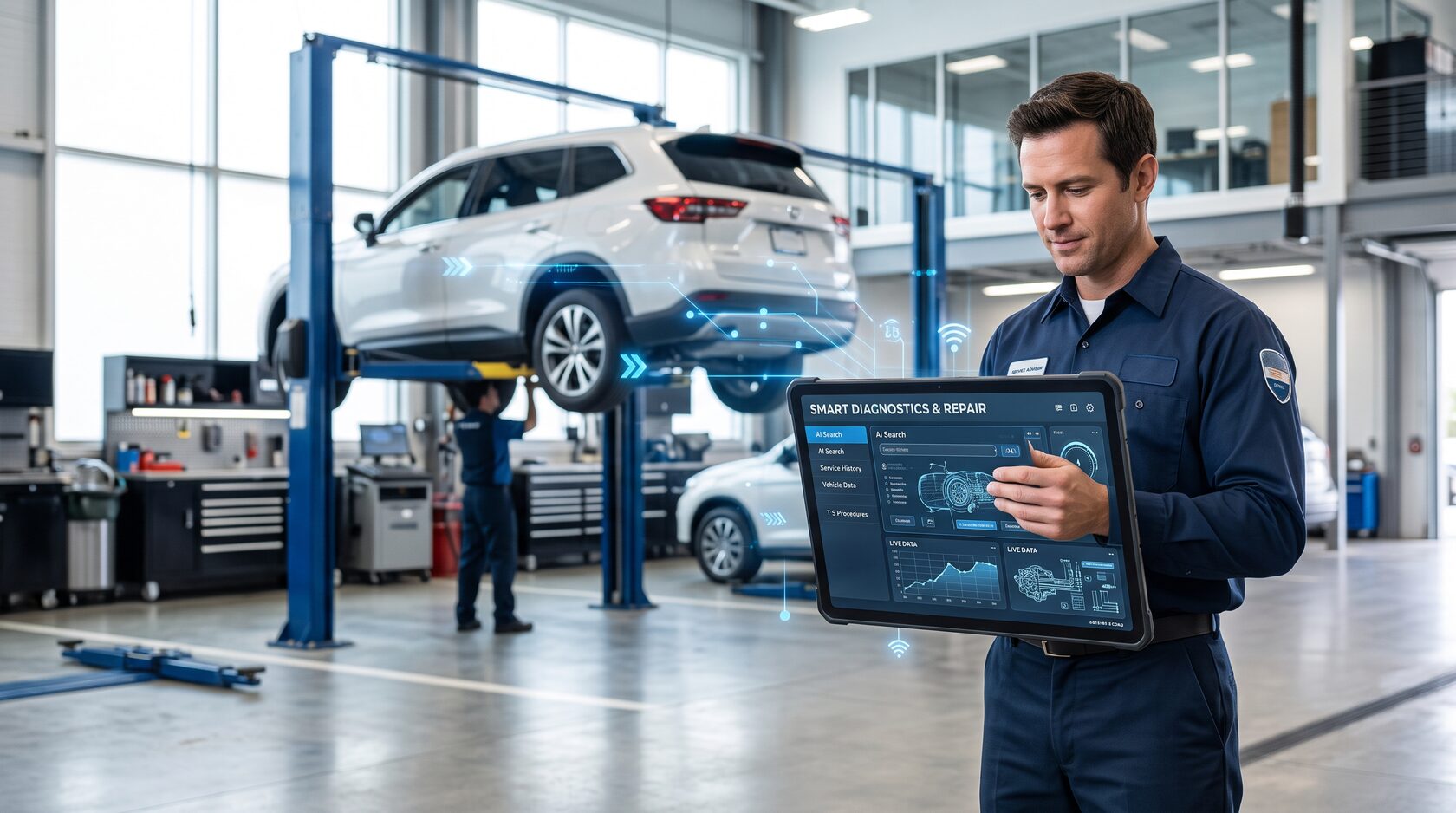
These challenges become even more complex as vehicles become more software driven. Modern vehicles contain advanced systems that require technicians and support teams to understand new technologies, diagnostics, and repair processes.
According to the 2025 Global EV Outlook from the International Energy Agency, global electric vehicle sales continued strong growth, increasing the need for updated technical knowledge across manufacturing, sales, and service operations.
This is why automotive knowledge management has become increasingly important. Organizations need a reliable way to organize information, deliver updates, and help employees find answers when they need them.
What to Look for in Automotive Knowledge Management Software
Choosing the right platform requires looking beyond basic document storage.
Automotive organizations need knowledge systems that can support complex information environments. A dealership network may need different capabilities than an internal engineering team or a customer service department.
The strongest solutions typically provide:
- Fast Search Capabilities – Employees should be able to quickly find relevant information without searching through multiple systems.
- AI Support – Modern platforms can use AI to improve search, recommend content, and provide faster answers.
- Content Governance – Teams need tools for approvals, ownership, version control, and ongoing updates.
- Integration Options – Knowledge should connect with CRM systems, service platforms, dealer tools, and employee workflows.
- Analytics and Reporting – Organizations should understand what information employees need and where knowledge gaps exist.
A strong platform also needs to support different users. A service technician working in the field may need immediate access to repair guidance from a mobile device. A customer service representative may need approved answers during a customer conversation. A dealership manager may need visibility into knowledge usage across teams.
The right knowledge management tools make information easier to access while creating a consistent experience across the organization.
Best Knowledge Management Tools for the Automotive Industry in 2026
The best automotive knowledge solutions vary based on company size, workflow requirements, and the type of information being managed.
A global automotive manufacturer may need enterprise governance and dealer network support. A smaller dealership group may prioritize ease of use and customer service capabilities.
Below are some of the leading platforms to consider in 2026.
KMS Lighthouse
KMS Lighthouse is designed for organizations that need controlled, accurate knowledge delivered during everyday workflows.
It is especially valuable for automotive manufacturers, dealer networks, service teams, and customer support operations where employees need fast access to approved information.
Key strengths include:
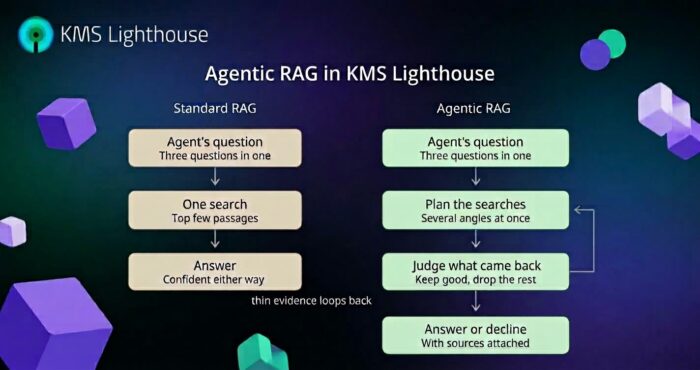
- AI powered search that helps users find answers quickly
- Guided workflows for complex procedures
- Content governance and knowledge ownership features
- Support for field service and customer support teams
- Analytics that identify knowledge gaps and improvement opportunities
Automotive organizations often manage thousands of documents, procedures, and updates across different departments. KMS Lighthouse helps bring that information together so employees can access the right knowledge at the right time.
For service teams, this can mean faster troubleshooting and more consistent repairs. For customer support teams, it can mean more accurate responses and improved customer experiences.
Document360
Document360 is a structured knowledge base platform designed for creating and managing documentation.
It supports internal knowledge bases, customer help centers, technical documentation, and product information.
Key strengths include:
- Structured article organization
- Version control
- Documentation templates
- Analytics
- AI assisted search capabilities
Document360 can be a good fit for automotive organizations that need to manage detailed technical content, manuals, and support documentation.
Guru
Guru focuses on helping teams access knowledge directly inside their existing workflows.
Its browser extension, verification features, and integrations with workplace applications make it useful for internal teams that need quick access to frequently used information.
Key strengths include:
- Knowledge verification
- AI powered answers
- Integration with collaboration tools
- Internal knowledge sharing
- Content management features
Guru can work well for teams that need flexible knowledge sharing, although organizations with highly complex service workflows may require more specialized capabilities.
Confluence
Confluence is a collaborative documentation platform commonly used by technical and product teams.
It provides a workspace for creating, organizing, and sharing internal information.
Key strengths include:
- Collaborative editing
- Templates
- Documentation spaces
- Integration with Atlassian products
- Team knowledge sharing
Confluence is often a practical choice for engineering, product, and operations teams that need a flexible documentation environment.
The best automotive knowledge platform ultimately depends on how your teams create, maintain, and use information every day.
Bloomfire
Bloomfire focuses on helping organizations share knowledge across large teams and improve information discovery.
It combines search, content management, analytics, and employee engagement features to help teams locate information faster.
Key strengths include:
- Enterprise knowledge sharing
- Search across different content formats
- Content recommendations
- Analytics and reporting
- Employee collaboration
Bloomfire can be useful for automotive organizations with large employee networks that need better internal communication. It helps bring scattered information together while encouraging employees to contribute and share knowledge.
eGain Knowledge Hub
eGain Knowledge Hub is designed for enterprise customer service environments where accurate information and consistent responses are important.
It supports organizations that need to deliver knowledge across multiple channels, including customer service, digital support, and assisted service interactions.
Key strengths include:
- AI powered knowledge delivery
- Customer service workflows
- Knowledge governance
- Omnichannel support
- Enterprise integrations
For automotive brands with large customer support operations, eGain can help improve how service teams access information during customer interactions.
Zendesk Guide
Zendesk Guide is a knowledge base solution built into the Zendesk customer service platform.
It is commonly used by organizations that want to create customer facing help centers and support resources connected with ticketing workflows.
Key strengths include:
- Customer self service content
- Help center creation
- Ticketing integration
- Content analytics
- Search functionality
For automotive companies focused on improving customer support experiences, Zendesk Guide can help customers find answers before contacting a support representative.
Salesforce Knowledge
Salesforce Knowledge provides knowledge management capabilities inside the Salesforce ecosystem.
It can be a strong option for automotive companies already using Salesforce for customer relationship management, sales, or service operations.
Key strengths include:
- Integration with Salesforce Service Cloud
- Internal and customer facing knowledge
- Content approval workflows
- Search capabilities
- AI features through Salesforce tools
Salesforce Knowledge works best when automotive organizations want knowledge connected directly to their existing customer and sales workflows.
ServiceNow Knowledge
ServiceNow Knowledge supports enterprise service management by connecting knowledge with employee and customer service processes.
It is often used by large organizations that already rely on ServiceNow for internal operations.
Key strengths include:
- Enterprise service workflows
- Knowledge articles connected to cases
- Approval processes
- Analytics
- AI assisted experiences
ServiceNow Knowledge can support automotive companies with complex internal operations, especially when IT, HR, facilities, and service teams already use the platform.
Notion
Notion provides a flexible workspace combining documents, databases, wikis, and project management features.
It is often selected by teams that want an adaptable environment for organizing internal information.
Key strengths include:
- Flexible knowledge pages
- Team documentation
- Databases
- Collaboration features
- AI capabilities
Notion can work well for smaller automotive teams, innovation groups, and departments that need flexibility. However, organizations managing large dealer networks or highly regulated service information may require stronger governance features.
How to Choose
Selecting the right platform starts with understanding how your organization uses information.
Before choosing a solution, evaluate your current challenges and define what success should look like.
Consider these questions:
- Who will use the platform most often?
- Will the primary users be technicians, dealership employees, customer service teams, or corporate staff?
- Do you need internal knowledge, customer self service, or both?
- Which systems need to connect with your knowledge platform?
- How much control do you need over content approvals and updates?
- Do you need AI search and automated knowledge recommendations?
Integration is especially important in automotive environments because information often needs to connect with existing systems, including dealer platforms, CRM software, service tools, and field support applications.
A platform that works well for a corporate office may not provide the speed and accessibility needed by a technician working at a dealership or in the field.
The growth of connected vehicles and digital services is increasing the need for better information management. According to Deloitte's 2025 Global Automotive Consumer Study, consumers continue placing greater importance on technology experiences and connected features in vehicles. As vehicle technology evolves, organizations need reliable ways to distribute updated knowledge.
Solutions designed for field service can help teams provide technicians with immediate access to procedures, troubleshooting information, and service guidance when working away from a central location.
FAQ
Knowledge Management Software helps dealerships provide employees with fast access to accurate repair procedures, warranty information, and customer service guidance. By reducing time spent searching for answers, service teams can resolve issues faster, improve consistency, and deliver better customer experiences across different locations.
Many automotive knowledge platforms can integrate with existing business systems through APIs, connectors, or workflow integrations. The exact capabilities depend on the platform and DMS provider. Integration helps employees access important information without switching between disconnected applications during daily tasks.
The best system depends on the organization's size, workflows, and goals. OEMs and large dealer networks typically need strong governance, AI search, analytics, and support for distributed teams. Platforms like KMS Lighthouse are designed to support complex knowledge environments where accuracy and accessibility are priorities.
Automotive companies use knowledge bases to organize service bulletins, repair procedures, recall updates, and technical documentation. With proper governance, teams can make sure employees access the latest approved information while reducing the risk of outdated instructions being used during repairs.
Building a Stronger Future With Automotive Knowledge Management
The automotive industry will continue becoming more complex as vehicles add new technology, software features, and connected services.
Organizations that invest in reliable knowledge management solutions can help employees work more efficiently, improve service quality, and create better customer experiences.
The right platform should make information easier to find, easier to maintain, and easier to apply across every part of the automotive ecosystem.
Contact us today to learn how KMS Lighthouse can help your automotive organization build a stronger knowledge foundation for the future.